


Pochettino’s Manchester United Interest: A Natural Draw, A Disruptive Force for US Soc
Mauricio Pochettino’s ambiguous farewell after the latest international window has fueled speculation about his future, with Manchester United reportedly emerging as a significant potential suitor. This interest, while a testament to his coaching pedigree, presents a considerable challenge and disruption for US Soccer.
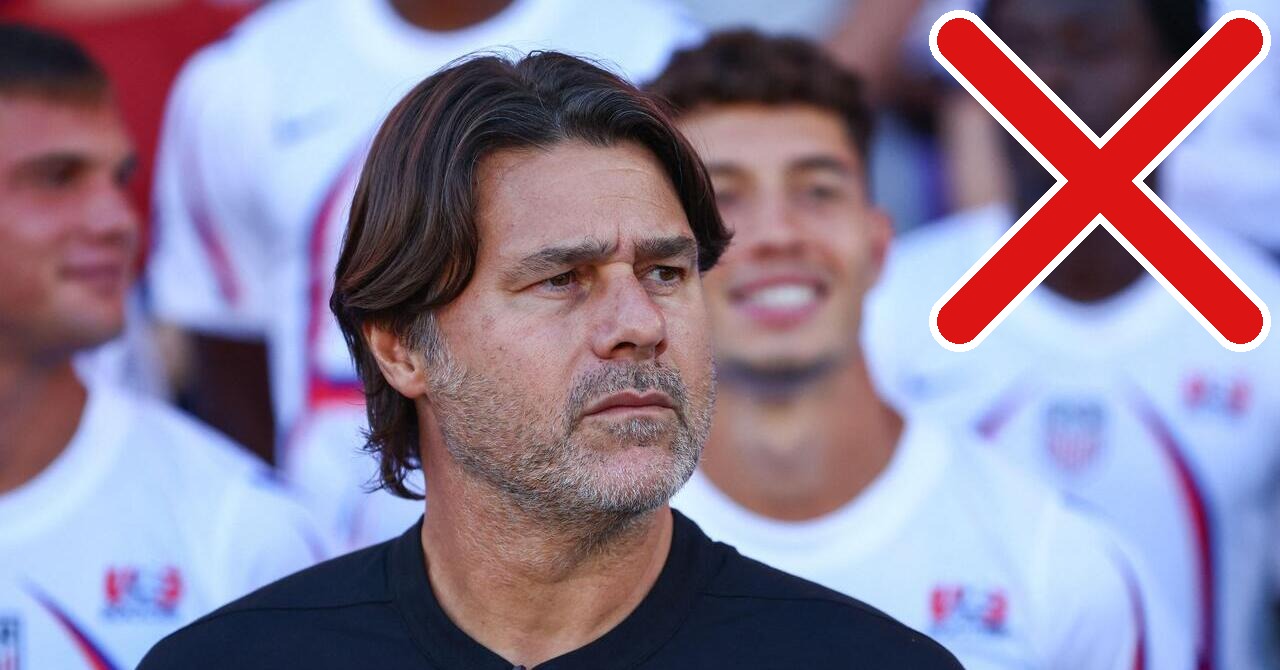
The former Tottenham manager’s brief, sing-song farewell – “See you next, see you next” – as he departed the press conference podium at Allianz Field in Saint Paul, has been interpreted as more than just a casual goodbye. It has amplified existing questions surrounding the longevity of his contract with the US men’s national team, which was renewed only in August with the aim of seeing him through to the 2030 World Cup.
For many, the idea of Pochettino remaining with US Soccer for a full four-year cycle always seemed ambitious. His name carries significant weight in club management circles, a reputation built on achieving near misses in both the Premier League and the Champions League. Coaches of his caliber, with a history of steering clubs to elite contention, are rarely content with long-term international projects when top club opportunities beckon.
The Allure of Old Trafford
Manchester United’s reported interest in Pochettino is not surprising; it is, in many ways, a natural progression given the club’s prolonged search for stability and success since the departure of Sir Alex Ferguson. Over the past decade, United have cycled through a diverse array of managerial archetypes – from domestic success stories and proven winners to former club legends and promising young coaches. Each tenure, however, has ultimately ended without the sustained dominance the club craves.
Pochettino’s profile aligns with many of the qualities United have sought. He is seen as someone who can blend the tactical acumen of Louis van Gaal with the pragmatic approach of José Mourinho, while also possessing the culture-building capabilities that were hoped for under figures like Ruben Amorim or Michael Carrick. His success in transforming Tottenham into a consistent challenger across multiple competitions, building upon his earlier work at Espanyol and Southampton, demonstrates his ability to scale his impact.
Even his tenure at Paris Saint-Germain, which did not culminate in the coveted Champions League title, provided invaluable experience in managing high-profile egos like Neymar, Kylian Mbappé, and Lionel Messi. Furthermore, his recent spell at Chelsea, despite its challenges, tested his resilience in navigating ownership interference and high-pressure environments. These experiences collectively shape the perception of Pochettino as a candidate capable of handling the immense demands at Old Trafford.
A Disruptive Force for US Soccer
The persistent interest from major European clubs, particularly Manchester United, places US Soccer in a precarious and unenviable position. The timing of such potential advances is particularly disruptive. The start of an international window, when a national team coach is most intensely engaged with their squad, is precisely when clubs often seek to make their move. This period, typically featuring a brief respite before the next fixture, is crucial for a new manager to assess players, implement training regimes, and formulate initial strategies to address team performance.
This dynamic has been a recurring theme for Pochettino. Even after signing a contract renewal with US Soccer, the prospect of him departing before the 2030 World Cup remained a tangible concern. Reports suggest that his retention was facilitated by a significant financial contribution from a billionaire donor, Ken Griffin, ensuring his wages did not directly strain the federation’s budget. However, the inclusion of a reported $10 million (£7.5 million) release clause was a critical element, providing a financial safety net for US Soccer should a major club come calling.
This clause, while making Pochettino’s appointment financially feasible for US Soccer, also inadvertently signals a potential exit strategy. It acknowledges the reality that a coach of his stature is likely to be a target for clubs with substantial financial resources. The clause ensures that if Pochettino were to leave, US Soccer would receive compensation, mitigating the financial blow of an early departure, unlike a scenario where he might have left after a full cycle with only pleasantries exchanged.
Historical Precedent and Managerial Mobility
The situation surrounding Pochettino and Manchester United is emblematic of a broader trend in modern football management. The days when clubs would make impulsive decisions to dismiss managers are largely over, replaced by more strategic, albeit sometimes protracted, hiring processes. However, the allure of elite club positions remains a powerful draw for top-tier coaches, often leading to a constant flux in managerial roles.
Pochettino’s career trajectory illustrates this mobility. Before his USMNT role, he was frequently linked with Tottenham Hotspur, a club he previously managed with considerable success. Milan also reportedly showed interest prior to the World Cup. Should Manchester United’s pursuit falter, or if another major European club like Real Madrid were to experience a managerial change, Pochettino would undoubtedly remain a prime candidate.
This constant potential for movement creates a challenging environment for national federations. While US Soccer has benefited from the financial backing and the release clause, the underlying issue of retaining top international talent remains. The federation must be prepared for the possibility that Pochettino may not see out his contract, necessitating a proactive approach to identifying and securing a suitable successor.
The Road Ahead for US Soccer
Should Pochettino depart, the onus will fall on US Soccer to identify and appoint a coach capable of leading the program into a new era, especially after the team’s engaging performances in the recent World Cup. This task is complicated by the fact that the federation has not appeared eager to replace Matt Crocker, who resigned as sporting director in April. The process of finding a new sporting director, and subsequently a new head coach, could be lengthy and complex.
However, if Pochettino’s tenure with the USMNT is indeed drawing to a close, the timing might be fortuitous. A split occurring early in the current cycle, rather than closer to a major tournament, allows more time for transition and rebuilding. The $10 million from his release clause could potentially be reinvested into securing a high-caliber replacement, ensuring the pool of potential candidates remains deep and competitive.
Ultimately, Pochettino’s potential move to Manchester United underscores the inherent tension between the stability offered by international management and the high-stakes, high-reward environment of elite club football. For US Soccer, it represents a natural consequence of appointing a globally recognized coach, but one that carries significant disruptive potential as they aim to build towards future success on the world stage.
Source: The Guardian
Related coverage
- Chelsea vs. Manchester United: A Premier League Matchday Live Build-up

Leave a Reply