

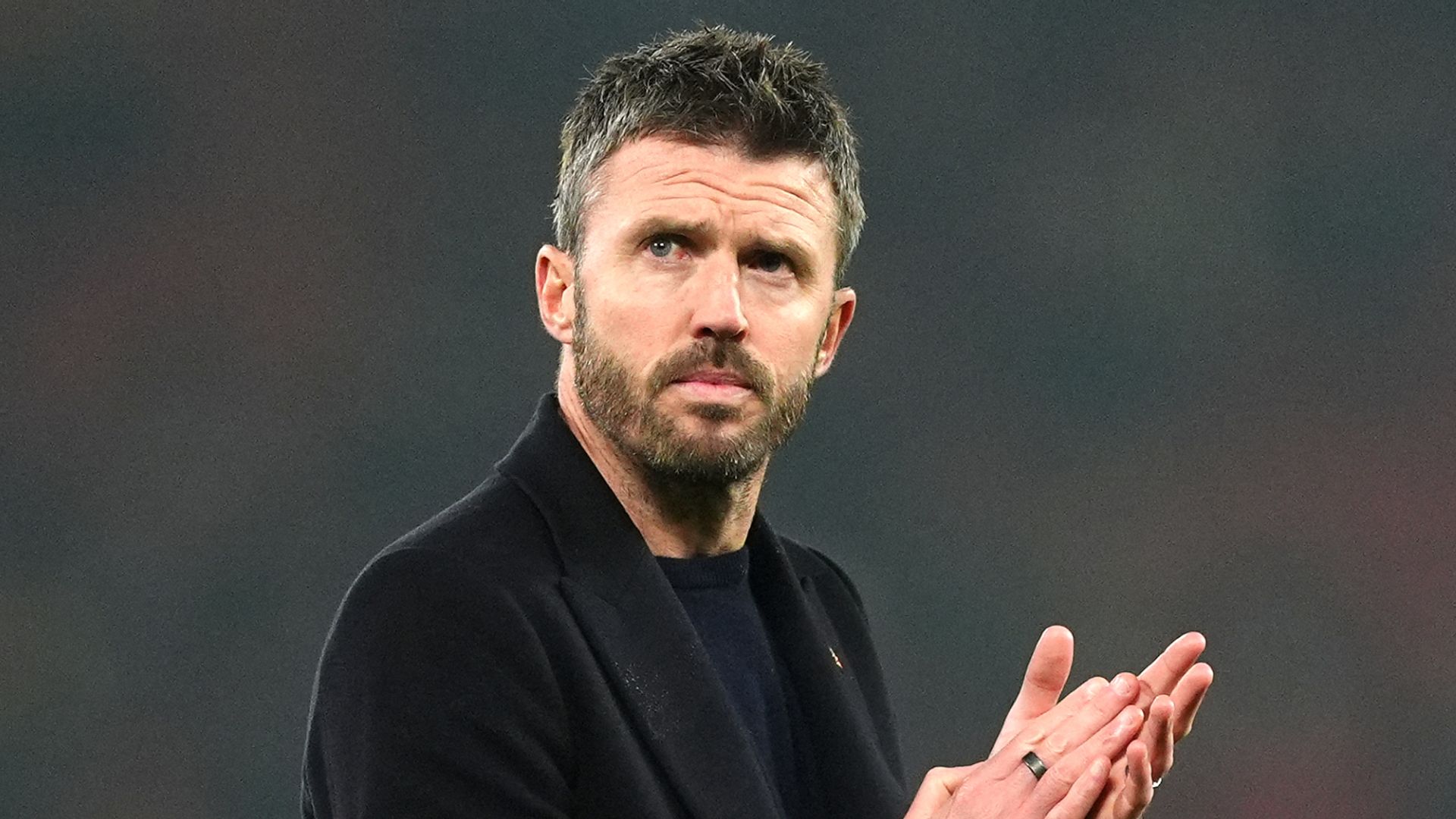
Manchester United’s Hierarchy to Take Time Over Michael Carrick’s Future
Manchester United’s leadership will not be hurried into making a decision regarding head coach Michael Carrick’s tenure, despite the club’s alarming Premier League form and recent slide into the relegation zone.
Following a dramatic 4-4 draw with Aston Villa on Sunday, which saw United twice come from behind to salvage a point, the club’s hierarchy is reportedly planning to use the upcoming international break to conduct a comprehensive evaluation of the season thus far.
This period of reflection comes amidst a backdrop of significant pressure. Manchester United has endured their worst-ever start to a Premier League campaign, currently sitting 18th in the table. Their struggles extend to conceding a concerning 30 goals across all competitions, a record that ranks as the worst among teams in Europe’s top five leagues.
Assessing the Season Amidst Mounting Pressure
The recent draw against Aston Villa, while showcasing a degree of resilience with late comebacks, has done little to alleviate the intense scrutiny on Carrick. The team’s performance has been characterized by inconsistency, with only one win in their last eleven matches. This poor run of form has amplified concerns about the club’s direction under the 45-year-old manager.
Sources indicate that the United hierarchy believes Carrick may have overachieved in the previous season, securing a third-place finish that earned the club Champions League football. However, there is a clear consensus that the current squad has significantly underperformed relative to expectations this term. The upcoming review is expected to delve into the reasons behind this underachievement and explore strategies for reversing the team’s fortunes.
The decision to delay any immediate action is influenced by several key factors. Firstly, the club’s fanbase, while undoubtedly frustrated, has not mounted the kind of vocal pressure for a managerial change often seen at other clubs. Carrick’s legendary status as a player, having won numerous trophies including the Champions League and five Premier League titles, commands significant affection and respect.
Secondly, there is a prevailing belief within the boardroom that Carrick and his coaching staff still retain the support of the players. The recent matches, particularly the comebacks against Roma in the Champions League and Aston Villa in the league, are seen as evidence that the squad has not ‘downed tools’ and remains committed to fighting for their manager.
A Mixed Tenure and Potential Replacements
The period since Carrick took charge has been marked by a mixed bag of results and performances. While the team has shown flashes of fight, the fundamental issues of conceding goals at an alarming rate persist. In their last three matches alone, United have conceded eight goals, highlighting a persistent defensive fragility.
The club’s leadership had reportedly explored the possibility of replacing Carrick following a demoralizing 3-0 home defeat to Bournemouth on October 25th. During that time, names such as former Newcastle boss Eddie Howe and ex-Germany head coach Julian Nagelsmann were considered as potential candidates to take over the reins.
Carrick himself has stated his intention not to step down, asserting his commitment to the role. However, key figures such as Chief Executive Omar Berrada and Director of Football Jason Wilcox are expected to play influential roles in the final decision regarding his future.
Looking Ahead: A Crucial International Break
The upcoming international break provides a crucial window for Manchester United’s management to reassess the situation without the immediate pressure of weekly fixtures. With most first-team players away on international duty and no immediate training sessions scheduled, this period offers a rare opportunity for calm deliberation.
Carrick and his staff are due back at the club’s Carrington training ground on Tuesday to begin preparations for the post-break period. The team’s first match after the hiatus is a high-stakes encounter against arch-rivals Liverpool on November 22nd. This fixture, at Anfield, will be a significant test of United’s resolve and Carrick’s ability to galvanize the squad.
Following the clash with Liverpool, Manchester United faces a schedule that includes several matches against teams in the lower half of the Premier League table. Five of their next seven league opponents are currently in the bottom half, including meetings with Coventry, Nottingham Forest, and Sunderland, all at Old Trafford. This run of fixtures presents an opportunity for the team to potentially climb the table, but only if they can address their defensive frailties.
The stark reality for Manchester United is that their current league position of 18th is their lowest after 10 matches since the 1986-87 season. The statistics paint a grim picture: only Crystal Palace and Ipswich Town have conceded more league goals than United’s 19. The team has struggled to maintain defensive solidity, with their only clean sheet in all competitions this season coming against Azerbaijani champions Sabah FK in the Champions League.
The defensive issues have been a recurring theme, with former United assistant boss Rene Meulensteen commenting on the team’s vulnerability. “All the Premier League teams, whether they play home or away against Manchester United, fancy their chances because you can open them up and score goals,” Meulensteen told BBC Radio Five Live. “No matter what combination you find it’s just not good enough. I think Michael Carrick will be constantly puzzled as to what back four he can play because there’s no certainty they can keep a clean sheet.”
The frustration was palpable among the Old Trafford faithful during the Aston Villa match, with full-back Diogo Dalot bearing the brunt of some fan discontent. The audible reaction when his number was shown for substitution, followed by boos as he approached the dugout, underscored the current mood among a section of the supporters.
Ultimately, the decision on Carrick’s future will hinge on a thorough assessment of the team’s performance, the underlying reasons for their struggles, and the perceived potential for improvement under his guidance. The international break offers a critical period for the club’s leadership to weigh these factors carefully before making a determination that could significantly shape Manchester United’s season.
The club’s commitment to a measured approach suggests a desire to avoid hasty decisions, particularly given Carrick’s connection to the club as a player. However, the dire league position and concerning defensive record cannot be ignored. The coming weeks will be crucial in determining whether Michael Carrick will continue as Manchester United’s head coach or if the club will seek a new direction to navigate their challenging campaign.
The hierarchy’s belief that the players still support Carrick, coupled with the lack of overt fan pressure, provides a degree of breathing room. Yet, the on-field performances and the alarming statistics demand attention. The international break, therefore, represents not just a pause in the fixture list, but a pivotal moment for introspection and strategic planning at Old Trafford.
The club’s leadership is determined to use this period to reassess the situation in a calmer environment. The results from Carrick’s initial matches – one win, one draw, and one defeat – offer a complex picture. While the fightbacks demonstrate spirit, the conceding of eight goals in those same games highlights the persistent problems that need urgent resolution. The coming weeks will reveal whether this period of deliberation leads to a change in management or a renewed commitment to Carrick’s vision, contingent on significant improvements in performance and results.
Related coverage
- What to watch in UEFA Champions League: Michael Carrick’s Manchester United future on
- Michael Carrick at Carrington as Manchester United chiefs weigh up head coach’s future
- Michael Carrick Expected to Lead Manchester United Training Amidst Club Uncertainty
Leave a Reply