

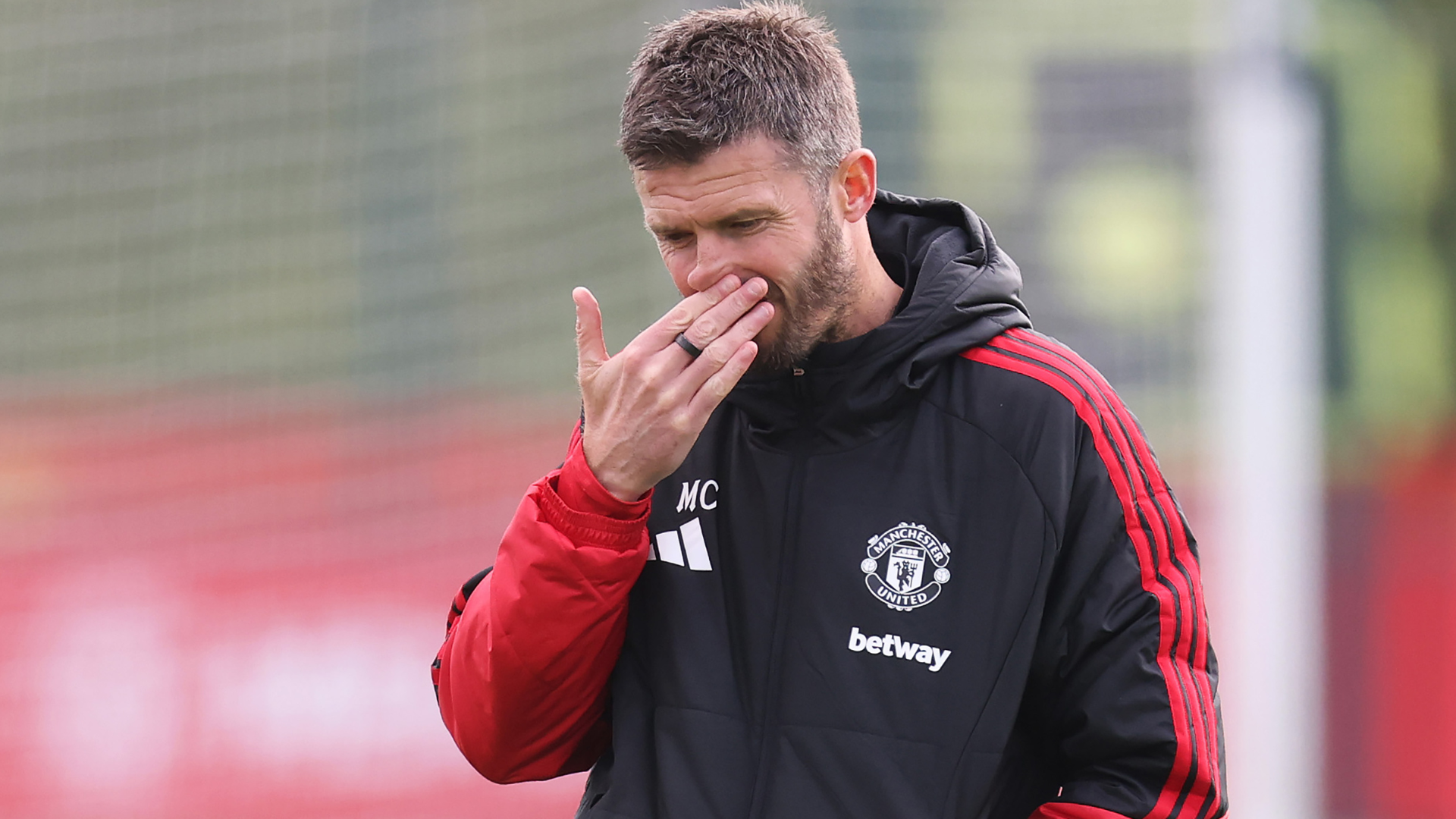
What to watch in UEFA Champions League: Michael Carrick’s Manchester United future on
Manchester United’s Champions League campaign faces a pivotal moment as they host Roma, with manager Michael Carrick’s future under intense scrutiny. The crucial fixture arrives at a time when several major European clubs are grappling with mounting pressure in the competition.
As the UEFA Champions League group stage reaches its halfway point, the stakes are rising for Europe’s elite. While clubs like Bayern Munich, Inter Milan, and Manchester City are focused on securing their passage to the knockout rounds, Manchester United finds itself in a more precarious position. Their current form raises legitimate concerns about their ability to even advance past the group stage, making their home encounter with Roma a critical juncture for both their European aspirations and, potentially, for manager Michael Carrick’s reign.
Carrick Under Pressure Amidst Poor Run
Just over a week ago, the prospect of Michael Carrick’s tenure as Manchester United manager seemed to be drawing to a close. A string of concerning results, including back-to-back defeats by three-goal margins against Como and Bournemouth, had seen the club languishing near the relegation zone in both the Premier League and the Champions League standings. Reports indicated internal dissent, with club captain Bruno Fernandes reportedly questioning Carrick’s tactical decisions. The situation was further complicated by center-back Lisandro Martinez’s public criticism of those responsible for managerial appointments and player recruitment.
Despite the mounting pressure, Carrick remained in his post. Part-owner Sir Jim Ratcliffe and the club’s hierarchy reportedly concluded that the manager, who had guided United to a third-place finish the previous season, deserved more time to steer the team back on course. Recent performances, including a promising first half against Chelsea at Stamford Bridge, appeared to offer some vindication for this decision. United displayed a potent counter-attacking threat, but ultimately failed to convert their dominance into goals.
The match against Chelsea highlighted a recurring issue for Manchester United: an inability to capitalize on promising situations. While the team showed flashes of its potential, a defensive lapse, attributed to Lisandro Martinez, led to the opening goal for Chelsea. This pattern of self-inflicted damage has plagued United, with numerous coaches struggling to instill consistency and prevent periods of defensive fragility. The challenge for the club’s leadership is significant, as replacing a manager mid-season is a drastic measure with no guarantee of immediate improvement.
Champions League Implications for Manchester United
While the immediate threat of relegation from the Premier League may seem distant, Manchester United faces a tangible risk of financial repercussions from an early exit from the Champions League. A defeat at home to Roma would leave them with a mere three points from their first three group games. Their remaining fixtures – away trips to Sporting and Villarreal, and home ties against RB Leipzig and Bayern Munich – present a daunting path to qualification.
The upcoming match against Roma, a team known for its potent attack, is therefore of paramount importance. The Italian side, having scored freely in their recent domestic fixtures, will likely approach the Old Trafford encounter with confidence. This fixture has all the makings of a critical test for Carrick and his squad, potentially defining the trajectory of his tenure.
Carrick’s Perspective Amidst Uncertainty
Michael Carrick, however, maintains a different perspective on his situation. Speaking ahead of the crucial fixture, he insisted that he does not feel like a manager with limited time left. “Perception is a funny thing,” Carrick stated, suggesting that external views might not reflect the internal reality. He emphasized his unwavering belief in the players’ commitment to the club, to him, and to each other. While acknowledging the need for improved performance and decision-making on the pitch, Carrick dismissed any doubts about the squad’s dedication.
The club’s decision to back Carrick a week prior could be interpreted in various ways. It might signify a long-term commitment to the manager’s vision, or it could simply reflect a pragmatic approach to avoid a hasty change ahead of a challenging run of games before the international break. The outcome of the Roma match, alongside the subsequent fixture against Aston Villa, will likely provide clarity on the hierarchy’s true intentions.
Broader European Context: Pressure on Other Giants
Manchester United is not the only major European club facing pressure. The midway point of the Champions League group stage has intensified the spotlight on several traditional powerhouses. Bayern Munich, Inter Milan, and Manchester City, all accustomed to deep runs in the competition, are currently in positions where they must fight to secure a place in the top two of their respective groups and advance to the knockout stages.
Inter Milan’s Internal Struggles
Even defending champions Inter Milan are experiencing a period of introspection. Despite being only three points behind league leaders Lazio in Serie A, and having secured a vital win against Shakhtar Donetsk in the Champions League while playing with ten men, the mood within the club has been described as concerning. Head coach Cristian Chivu has publicly questioned his team’s “approach and determination.” Senior defender Alessandro Bastoni echoed these sentiments, speaking of an “inadequate” mentality.
Midfielder Nicolo Barella offered the most damning assessment, stating, “We haven’t had the right attitude since the start of the season, and it’s a negative thing.” He suggested that the team’s struggles are as much a battle against internal issues as against their opponents. This introspection comes despite a strong underlying performance metric, with Inter generating an impressive 2.5 non-penalty expected goals per game in their domestic campaign.
The absence of key players, including Lautaro Martinez, has undoubtedly impacted Inter’s performances. Martinez’s unavailability forced Chivu to experiment with Marcus Thuram as a lone striker in a recent match, an experiment that did not yield the desired results. While Martinez is set to miss the trip to Feyenoord, Inter possesses the depth of quality to secure a victory in Rotterdam, even without their captain and other absent senior figures like Bastoni and John Stones. The team’s underlying statistics suggest that their current standing in the Champions League might not fully reflect their potential, with a few different outcomes potentially placing them in a much stronger position with over seven points.
What to Watch in the Coming Fixtures
The upcoming round of Champions League fixtures promises significant drama. For Manchester United, the home game against Roma is a must-win scenario. Their ability to control their own destiny in the competition hinges on securing three points against the Italian side. The tactical battle between Carrick’s United and Roma’s potent attack will be a key storyline to follow.
Elsewhere, the pressure on clubs like Inter Milan will continue. Their ability to overcome their perceived mental hurdles and secure results away from home, starting with the trip to Feyenoord, will be crucial. The performances of these traditional giants will be closely monitored as the group stage enters its critical latter half.
The Champions League is living up to its reputation as a stage where pressure mounts and futures can be decided. For Michael Carrick and Manchester United, the game against Roma represents a defining moment, with the club’s European hopes and the manager’s job potentially on the line.
The broader narrative of the Champions League at this stage often involves teams needing to recover from slow starts. Bayern Munich and Manchester City, for instance, will be looking to solidify their positions and avoid any slip-ups that could jeopardize their progression. The coming matches will reveal which teams possess the resilience and quality to navigate these challenging periods and which might face an earlier-than-expected exit.
Ultimately, the focus remains on Manchester United’s immediate challenge. The performance against Roma will not only determine their standing in the group but also offer a significant insight into the club’s direction under Sir Jim Ratcliffe’s ownership and the long-term prospects for Michael Carrick as manager.
The tactical approach of both sides will be fascinating. United’s need for a victory might force a more attacking posture, while Roma’s confidence from their attacking prowess could lead to an open, end-to-end contest. The midfield battle and the effectiveness of counter-attacks will likely be decisive factors in what promises to be a high-stakes encounter.
The commitment Carrick speaks of will be tested on the pitch. Can Manchester United translate their potential into a crucial win, or will the familiar patterns of inconsistency and defensive frailty resurface? The answers will begin to emerge under the lights at Old Trafford.
Related coverage
- Michael Carrick at Carrington as Manchester United chiefs weigh up head coach’s future
- Michael Carrick Expected to Lead Manchester United Training Amidst Club Uncertainty
- Matchday Live: Carrick Defiant Amidst Manchester United Struggles, Liverpool-Arsenal B

Leave a Reply